
Favourite book series

I love getting into a good book series so I thought I’d make a list of my favourites.

Two things about this list:

  1. I adore some duologies (and I’ll list a few at the end) but a trilogy is the minimum requirement for being considered a proper series.

  2. My list is quite long, so I’ve split some of the sections into ‘favourite’ and ‘very favourite’ series.

Here’s my list, grouped by genre and sorted alphabetically by series name.
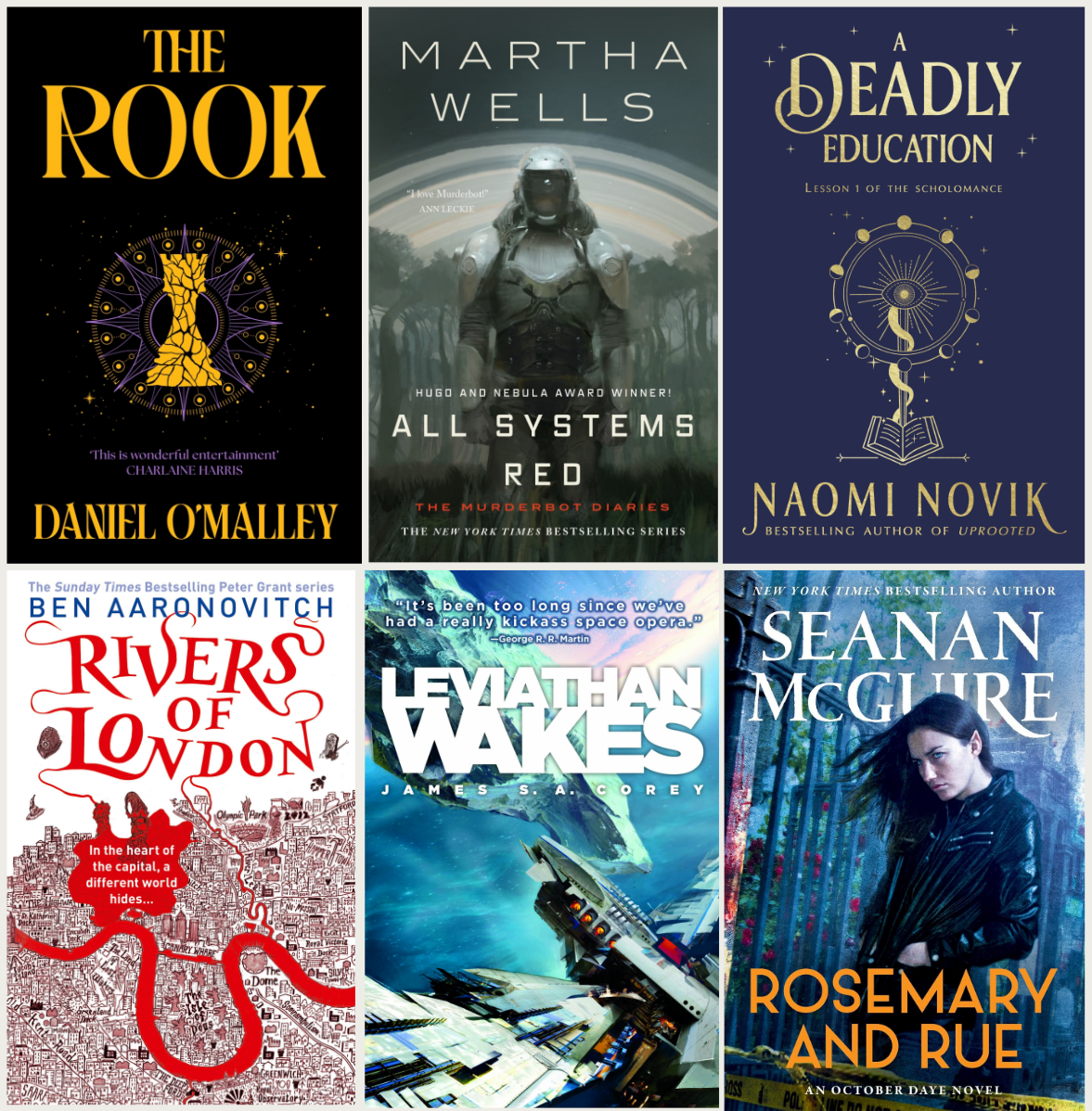
A collage of six book covers for The Rook, All Systems Red, A Deadly Education, Rivers of London, Leviathan Wakes, and Rosemary and Rue

Speculative fiction

Very favourite

  1. Broken Earth series by NK Jemison – three novels; 2015–2017

  2. Checquy Files series by Daniel O'Malley – four novels so far; 2012–2025

  3. Expanse series by James SA Corey – nine novels and nine short stories; 2011–2021

  4. Hitchhiker's Guide to the Galaxy series by Douglas Adams and later by Eoin Cofler – six novels; 1979–1992 original five, 2009 follow-up

  5. Hunger Games series by Suzanne Collins – five novels so far; 2008–2010 original trilogy, 2020–2025 further novels

  6. Ghost Roads series by Seanan McGuire – three novels; 2018–2021

  7. Grishaverse series and universe by Leigh Bardugo – seven novels and multiple companion works (short stories, graphic novels, collections); 2012–2014 Shadow and Bone trilogy, 2015–2016 Six of Crows duology, 2019–2021 King of Scars duology, 2012–2017 other works

  8. Hench series by Natalie Zina Walschots – two novels so far, with a third novel planned; 2020–2026

  9. Imperial Radch series and universe by Ann Leckie – six novels and two short stories so far; 2013–2015 original trilogy, 2012–2026 other works

  10. InCryptid series by Seanan McGuire – fifteen novels and over fifty short stories so far; 2012–2026

  11. Kate Daniels series by Ilona Andrews – nineteen novels, two short stories, and one short story collection; 2007–2018 original ten-book series, 2015–2023 other works

  12. Left-Handed Booksellers of London series by Garth Nix – two novels so far, with a third on its way; 2020–2023, third novel scheduled November 2027

  13. Legends & Lattes series by Travis Baldree – three novels so far; 2022–2025

  14. Monk & Robot series by Becky Chambers – two novels so far, open for third novel; 2021–2022

  15. Murderbot Diaries series by Martha Wells – five novellas and two novels so far; 2007–2023

  16. Newsflesh series by Seanan McGuire writing as Mira Grant – three novels, one novella, and one short story; 2010–2016

  17. October Daye series by Seanan McGuire – twenty novels and over forty short stories so far; 2009–2026

  18. Old Kingdom Chronicles series by Garth Nix – six novels, one novella, and five short stories so far; 1995–2005

  19. Old Man's War series by John Scalzi – seven novels and four short stories so far; 2005–2025

  20. Percy Jackson & The Olympians series and universe by Rick Riordan – sixteen novels and multiple other works (other series, short stories, colouring books, etc); 2005–2024 seven original novels of the Olympians series, 2009–2025 other works

  21. Rama series by Arthur C Clarke and Gentry Lee – four novels, with the last three written with Gentry Lee; 1976–1993

  22. Rivers of London series and universe by Ben Aaronovitch – ten novels, five novellas, one short story collection, and twelve graphic novels so far; 2011–2025

  23. Scholomance trilogy by Naomi Novik – three novels; 2020–2022

  24. Bone Street Rumba series by Daniel José Older – three novels; 2015–2017

  25. Song of the Lioness series and Tortall universe by Tamora Pierce – four novels in this series and five other series; 1983–1988

  26. Wayward Children series by Seanan McGuire – eleven novellas so far; 2016–2026

  27. Zones of Thought series by Vernor Vinge – four novels; 1983–1988

Favourite

  1. Adventures of Amina al-Sirafi duology by Shannon Chakraborty – duology so far; may continue to series

  2. Artemis Fowl series and universe by Eoin Cofler

  3. Binty trilogy by Nnedi Okorafor

  4. Brain & Brawn Ship series by Anne McCaffrey

  5. Captive's War series by James SA Corey – duology so far; will continue to series

  6. Circle of Magic series and Circle universe (two other series) by Tamora Pierce

  7. Craft Sequence series by Max Gladstone

  8. Crucible trilogy by Abigail Owen – duology so far; will continue to trilogy

  9. Dead & Breakfast Mystery series by Rosiee Thor and Kat Hillis – duology so far; will continue to series

  10. Delta-v trilogy by Daniel Suarez – duology so far; will continue to trilogy

  11. Dispatcher series by John Scalzi

  12. Dune Chronicles series and universe by Frank Herbert, Brian Herbert, and Kevin J Anserson

  13. Foundation series by Isaac Asimov

  14. Harry Potter series by JK Rowling – yes, I know: ‘It’s not too late to walk away from Harry Potter’ and ‘There is no ethical consumption of HBO’s Harry Potter series’

  15. His Dark Materials series by Philip Pullman

  16. Lady Astronaut series by Mary Robinette Kowal

  17. Laundry Files by Charles Stross

  18. Lord of the Rings trilogy and universe by JRR Tolkien

  19. Narnia series by CS Lewis

  20. Ninth House trilogy by Leigh Bardugo

  21. Nothing is Promised series by Susan Kaye Quinn

  22. Parasitology series by Seanan McGuire writing as Mira Grant

  23. Parasol Protectorate series and universe (two other series) by Gail Carriger

  24. Rising World series by Martha Wells – duology so far; will continue to trilogy

  25. Robot series and universe (37 short stories) by Isaac Asimov

  26. Sirantha Jax series by Ann Aguirre

  27. Spellshop series by Sarah Beth Durst

  28. Tomes & Tea by Rebecca Thorne

  29. Weary Dragon Inn series by S Usher Evans
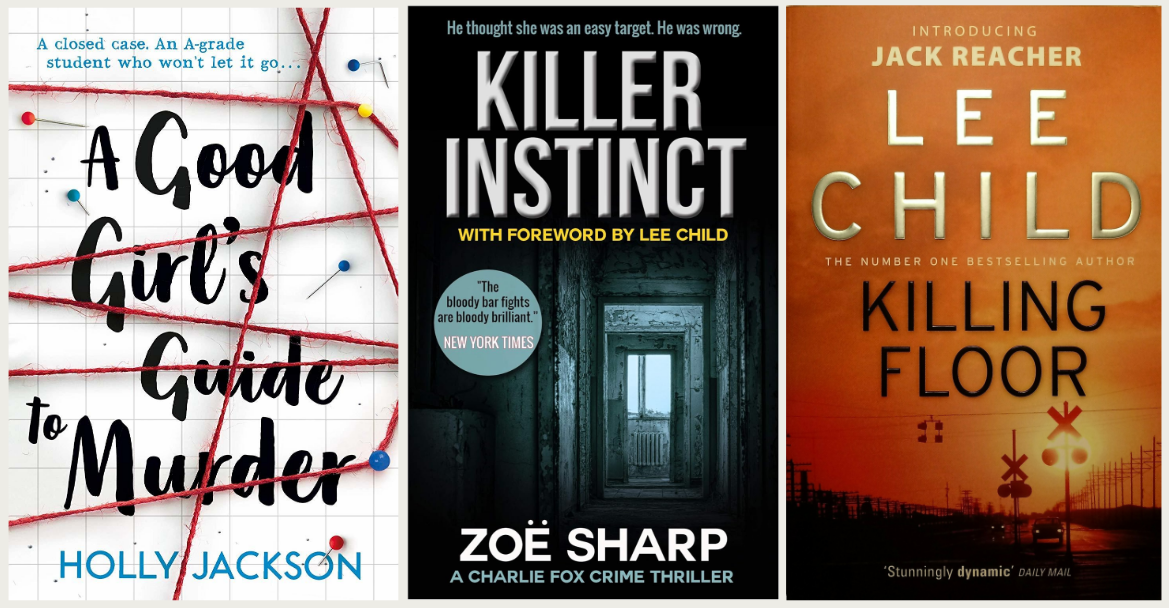
A collage of three book covers: A Good Girl's Guide to Murder, Killer Instinct, and Killing Floor

Crime & Mystery

Very favourite

  1. A Good Girl's Guide to Murder series by Holly Jackson – three novels and one novella; 2019–2021

  2. Charlie Fox series by Zoë Sharp – thirteen novels and one novella; 2001–2021

  3. Jack Reacher series by Lee Child and Andrew Child – thirty one novels (last six with Andrew Child) and fourteen short stories so far; 1997–2026

Favourite

  1. Detective Jude Fontaine Mysteries series by Ann Frasier

  2. Elise Sandburg Mysteries series by Ann Frasier

  3. Ellie Foreman series by Libby Fischer Hellmann

  4. Georgia Davis series by Libby Fischer Hellmann

  5. Hercule Poirot series by Agatha Christie

  6. Martin Hench series by Cory Doctorow

  7. Millennium series by Stieg Larsson, then by David Lagercrantz, and now by Karin Margareta

Adventure

  1. Faraway Tree series by Enid Blyton

  2. Five Find-Outers series by Enid Blyton

Coming-of-age

  1. Anne of Green Gables series by Lucy Maud Montgomery

  2. Little House on the Prairie series and universe by Laura Ingalls Wilder

  3. Little Women series by Louisa May Alcott

  4. Malory Towers series by Enid Blyton

Series I haven't finished yet

  1. Dark is Rising Sequence series by Susan Cooper

  2. Ender’s Game series by Orson Scott Card

  3. Honorverse by David Weber

  4. Little Brother series by Cory Doctorow

  5. Locked Tomb trilogy by Tamsyn Muir

  6. Sprawl series and universe (three short stories) by William Gibson

  7. Steerswoman series by Rosemary Kirstein – currently four of a planned seven books have been released

Incomplete series

Sadly, the publisher hasn’t commissioned Seanan McGuire to write the third book in both of these series. Both series are still worth reading though.

  1. Indexing series by Seanan McGuire writing as Mira Grant
  2. Into the Drowning Deep series by Seanan McGuire writing as Mira Grant

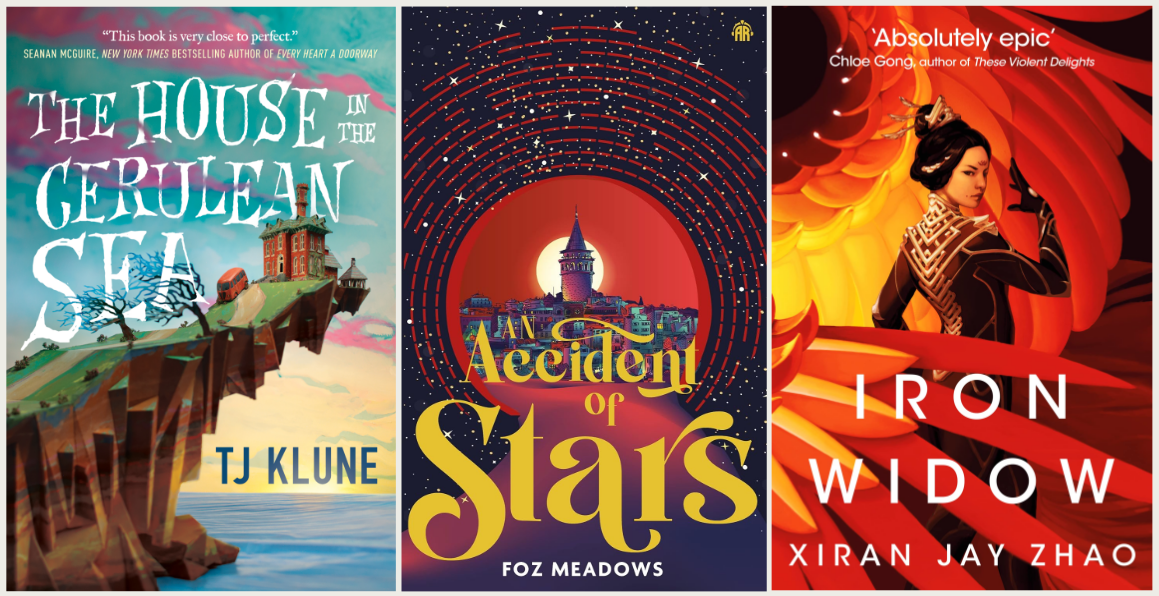
A collage of three book covers for: The House in the Cerulean Sea, An Accident of Stars, and Iron Widow

Favourite duologies

Very favourite

  1. Cerulean Chronicles duology by TJ Klune – two novels; 2020–2024

  2. Manifold Worlds duology by Foz Meadows – two novels; 2022–2025

Favourite

  1. Blake & Byron Thrillers duology by Zoë Sharp

  2. Daemon duology by Daniel Suarez

  3. Dark Lord Davi duology by Django Wexler

  4. Eschaton duology by Charles Stross

  5. Eve Rossi duology by Stefanie Pintoff

  6. Inland Empire Mysteries duology by Ann Frasier

  7. Iron Widow duology by Xiran Jay Zhao

Some stats

Since I’m a fan of statistics, I ran the numbers: 62% of my favourite series were written by women or non-binary folks while 38% were written by men.

Though if you count by unique author instead (ie the four Seanan McGuire series and four Mira Grant series all count as a single author) then 57% of my favourite-series authors are women or non-binary while 43% are men.

Over to you…

So those were my favourite book series. I’m now dying to know: what are yours?

I already have a few excellent series on my to-read list – like Earthsea, Discworld, Dragonriders of Pern, Lilith’s Brood, and Wayfarers – but I’m always happy to add more :)

My favourite ebook typefaces

Since I’ve been asked several times what my favourite ebook typefaces are, I figured I should provide a more comprehensive answer instead of just replying to folks individually in the comments or on social media.

Context: where I read my ebooks

Like most people, I started reading ebooks on a Kindle ereader, though I have since moved on to a Kobo ereader.

Over time I have also compiled a fairly large collection of DRM-free ebooks.

Screenshot of a folder on a computer showing 29 subfolders of books and book series by author Cory Doctorow.

I read these downloaded ebooks in one of three ways:

  • Transfer them to my Kobo ereader.

  • Read them on my Linux computers using Foliate.

  • Read them on my Android devices using ReadEra.

ReadEra is great, by the way, and I even purchased ReadEra Premium (for one-time fee of $24) since that supports the developer financially and, relevant to today’s topic, also lets you add your own fonts to the app.

First-choice typefaces

The typefaces I use to read almost all my ebooks are Bookerly (download) and Literata (download basic, download full family)

Graphic showing the opening paragraph from Naomi Novak’s book A Deadly Education set in the Bookerly and Literata typefaces.

I use Bookerly on my Kindle, Literata on my Kobo, and I switch between the two when reading in Foliate and ReadEra.

Second-choice typefaces

New books

If, for some reason, I don’t want to use Bookerly or Literata, my second choices are usually Caecilia (purchase) or Bitter (download).

Graphic showing the opening paragraph from Naomi Novak’s book A Deadly Education set in the Caecilia and Bitter typefaces.

Caecilia is Kindle-only; Bitter I can use on Kobo, Foliate, and ReadEra.

If I don’t want to use a slab serif, however, I usually go with Vollkorn (download) or Merriweather (download), depending on the vibe of the book I’m reading.

Graphic showing the opening paragraph from Naomi Novak’s book A Deadly Education set in the Vollkorn and Merriweather typefaces.

Classic books

Those are all great typefaces for reading books in my favourite genres of science fiction, fantasy, crime, mystery, and thriller. However, it just doesn’t feel right to read ebook versions of classic books or older books using a slab serif or otherwise modern typeface.

In an earlier post, I’d listed the four Latin-script typefaces that come to mind when you think of what older books, magazines, and other text-heavy material used to be printed in:

When I want to read the classics, poetry, or just generally older books, these are the typefaces I turn to.

Of those typefaces, the ones I like to read ebooks in are Bembo and Caslon. The specific digital versions I use are ETbb (download) for Bembo and Willy Caslon (purchase) for Caslon.

Graphic showing the opening paragraph from Margaret Mitchell’s book Gone with the Wind set in the ETbb and Willy Caslon typefaces.

Another good Bembo version/alternative that I like is Spectral (download), though I don’t use this very often.

Much as I like Garamond and Baskerville, for reading ebooks they just don’t do it for me.

Graphic showing the opening paragraph from Margaret Mitchell’s book Gone with the Wind set in the Stempel Garamond and Libre Baskerville typefaces.

If Garamond and Baskerville do float your boat though, my recommended free(ish) versions of those typefaces are:

The Conversation website is a great example of Libre Baskerville in action, fyi.

Children’s books

While I rarely read children’s books these days, I did go back and read some of the Enid Blyton books I first read when I was as a child. The typefaces I use when reading those ebooks were Besley* (download) and Century Schoolbook (download).

Graphic showing the opening paragraph from Enid Blyton’s book Circus of Adventure set in the Besley* and Century Schoolbook typefaces.

Typefaces I don’t use

I know this is a post about the typefaces I do use, but I should also mention a couple of default and popular ereader typefaces that I actively don’t use.

For example, I almost never use a sans serif typeface unless the book – usually a textbook or non-fiction book – specifically calls for it.

And I don’t use any of the other serif typefaces available on most ereader devices and ebook reading software – typefaces like Palatino, Rakuten Serif, Noto Serif, Georgia, and Malabar (which you used to get on older Kobo ereaders).

Graphic showing the opening paragraph from Naomi Novak’s book A Deadly Education set in the Palatino and Rakuten Serif typefaces.

Rakuten Serif is the default serif typeface on Kobo ereaders, by the way. I did read a couple of books using this typeface when I first got my Kobo, but I never got comfortable with how the text looked. This typeface is too much like Baskerville for my liking (at least when it comes to reading ebooks).

Graphic showing the name “Quetzalcoatl” set in the Libre Baskerville, Rakuten Serif, and Novela typefaces.

The one ereader typeface I haven’t used, but would like to at some point, is Amasis, which is a typeface available on Nook ereaders.

Final thoughts

It makes sense that the typefaces I’ve settled on were designed for reading on screens, and specifically for reading ebooks on ereader devices and through ereader apps. And I love that most of the typefaces I’ve mentioned above are easy to download and free to use.

What typefaces do you use for reading ebooks? I know from chatting with folks online that there’s a wide range of opinions out there. I’d love to hear about which typefaces you’ve tried and which ones you find yourself using more than others.

Typefaces on book copyright pages

I don’t think it was ever common practice but, when I was a kid, I feel like more books used to mention what typeface they were printed in.

Some examples

Here are a few examples of older and newer books in our collection that mention the typefaces they’re printed in, as shown on their copyright pages.

A graphic showing the scans of the copyright page of four books. The pages have been cropped so you see only the lines that tell you what typeface each book was printed in. Headings above each scanned section name the typefaces used, which are Dante, Bembo, Minion, and Sabon. Text below each page tells you which book each page was scanned from. These are The Dark is Rising Sequence by Susan Cooper, Terra Nullius by Claire G Coleman, The Endsister by Penni Russon, and Bloody Hell! by Mona Eltahawy.

The typefaces used in those books are:

These are all classified as Garalde or old-style typefaces, by the way, and I love all four of them.

(I haven’t written anything in Dante myself, but I do enjoy reading books set in it.)

A tiny peek behind the curtain

Reading through the copyright page at the start of every book taught me so much about publishing and printing. In fact, that’s probably where I first came across the concept of typefaces.

Those pages also introduced me to things like copyright, ISBN, editions, prints, and the cities and countries in which book designers, typesetters, and printers were located.

I loved learning and nerding out about all this when I was younger and, to this day, I go through the entire copyright page of every book I read. [1]

Of course I get an extra thrill when I find a book that tells you what typeface it was set in.

It’s even cooler if it tells you the font size and line spacing used. Those are the numbers separated by a slash that are sometimes printed just before the typeface name, by the way. So, “10/12 pt Sabon” means 10 point Sabon with 12 point line spacing (or “leading”, as it was traditionally called).

It takes almost no effort to add this information to a copyright page and I wish more publishers would do it or more authors would insist upon it.

Oh well.


[1] This is one of the things I find incredibly annoying about Amazon Kindle ereaders. When you open a new book on those devices, they jump straight to the main text. That means every time I open a book, I have to manually make my way back to the cover so I can read all the front matter before starting the main text. Conversely, I love that Kobo ereaders open new books at the cover, so you get the chance to read through all the front matter every time. Having read books on Kindles for many years, reading books on Kobos now brings me a lot of joy :)

Leaving the Amazon Kindle ecosystem

The Amazon Kindle is an amazing product that revolutionised the world of reading when it was launched in 2007.

Sadly, it is now time for me to completely leave this ecosystem.

Happily, there are other, non-shitty ecosystems that you can get into instead.

More on all that in a minute.

Long-time Kindle user

I got my first Kindle in 2010 as a birthday present from Nadia. This was a second generation Kindle and the first model that was available outside of the US, hence its ‘Kindle 2 international’ name.

The first ebooks I bought were Stieg Larsson’s Millennium series and Larsson was the first author to sell over a million books on Kindle.

Screenshot of an Amazon Kindle library showing the purchase of ‘The Girl with the Dragon Tattoo (Millennium series Book 1)’ by Stieg Larsson on 14 September 2010.

I even got this Kindle signed by James “The Amazing” Randi when I attended The Amaz!ng Meeting in Sydney towards the end of 2010 :)

Photo of the back of an Amazon Kindle device that’s been signed in gold marker. The signature reads, “To Ameel – James Randi”.

Since 2010, various versions and iterations of Kindles have been my default book reading device.

Close-up photo of a man holding a Kindle Oasis device while sitting in a residential garden. The eReader’s screen shows the cover of the book, ‘The Left-Handed Booksellers of London’ by Garth Nix.

As a result, Nadia and I have built an extensive ebook collection.

Screenshot of an Amazon account ‘Digital Content’ screen showing 760 ebooks and 75 audiobooks.

I also have a decent audiobook collection on Audible, which is great for books like Andy Weir’s Project Hail Mary, in which your experience is elevated by the sound effects, or Ann Leckie’s Ancillary Justice, in which the narration really helps you with the pronunciation of names.

Screenshot of an Audible library listing three books: ‘Project Hail Mary’ by Andy Weir; ‘Lock In (Narrated by Amber Benson)’ by John Scalzi; and ‘Ancillary Justice: The Imperial Radch Series, Books 1’ by Ann Leckie.

Amazon purchased Audible in 2008 and, for a while, they were fantastic stewards of this service. For example, they launched the Audible Frontiers imprint through which they started recording science fiction and fantasy books that deserved to be heard; and they launched the ‘Whispersync for Voice’ feature that allowed you to switch seamlessly between the Kindle ebook and Audible audiobook versions of the book you were reading.

All of this was really cool and, as a result, I have been heavily invested in the Kindle-Audible ecosystem for years.

Not all sunshine and rainbows

Your books are not yours

The biggest issue with the Kindle and Audible ecosystem has always been that you don’t actually “buy” any books, you only “licence” them.

What this means is that Amazon can delete any book from your library if it itself loses the licence to that book – like it did in 2009 with, ironically, George Orwell’s Nineteen Eighty-Four and Animal Farm. Though in that specific case it was because Amazon discovered it didn’t own the correct licence in the first place. ¯\_(ツ)_/¯

You also can’t resell, back-up, or archive the books you thought you had purchased, and your kids can’t inherit your ebook collection either. In fact, if you delete your Amazon account, all your books go with it.

This has not been a concern to me because there are, um, workarounds to these restrictions for both Kindle and Audible.

Animated GIF showing a man tapping his head as if to say, “that’s smart”.

Market power and DRM

Even though this ecosystem’s licencing restrictions weren’t an issue for me, Amazon’s market dominance and, later, market abuse became an issue, especially on the audiobook side. This became so egregious that, in 2014, Cory Doctorow stopped selling his audiobooks via Audible.

It took me a little longer to catch on, so with the exception of Project Hail Mary in 2021, I stopped buying audiobooks from Audible in 2017. These days, if I do buy an audiobook, I buy it directly from the author if I can – like I do with Doctorow’s books. (It helps, of course, that I rarely listen to audiobooks any more. These days I mostly listen to podcasts.)

Things aren’t as bad on the Kindle side since there have long been viable alternatives. Kobo launched its ebook store in 2009, for example, and then its first eReader in 2010. Authors, publishers, and other booksellers have been selling ebooks online for years as well.

Not all doom and gloom, either

Not everything about the Kindle ecosystem is bad, of course. They were pioneers and innovators in the e-ink reader space, their device-to-device synchronisation is great, their devices themselves are excellent…the list goes on.

Low ebook prices

Amazon also made the most of their market power by, basically, forcing publishers to keep mass-market ebook prices low. We all know that book publishers (like film studios and record companies) work very hard to extract as much value as they can from both creators and consumers. But, for a while, thanks to the likes of Apple (with iTunes) and Amazon (with Kindle), the price of music tracks and ebooks remained low.

To counter Amazon’s insistence on keeping ebook prices low (typically US$9.99 for most fiction books), Apple and the large book publishers colluded to raise overall ebook prices, for which they were rightly sued. The book publishers all settled so, in 2013, only Apple was found guilty of price fixing.

Ebook prices have gone up since then, but I’m sure they would have be a lot higher if publishers could have had their way all along.

Still the default choice

The upshot of all this is that, even though I’ve been buying ebooks and audiobooks from authors, publishers, and other online bookstores in parallel for years, Amazon remained my go-to place for buying ebooks.

Switching ecosystems

Laziness, inertia, and a few remnants of brand loyalty (more so after the book publishers’ collusion) kept me in the Kindle ecosystem, but Amazon’s enshittification continued, so last year I finally had the time and brain-space to start moving to a different ecosystem.

I prefer to read on e-ink devices (meaning no Apple Books or Google Books), which means the obvious alternative was the Kobo ecosystem and so that’s where I went.

Hello Kobo

I formally started my move to the Kobo ebook and audiobook ecosystem when I bought the Kobo Clara Colour eReader. I still had a few unread books on Kindle – which I’m still making my way through, by the way – but that was when I switched to using this Kobo as my primary reading device.

Making the switch was pretty easy since I already had a Kobo account. I’d created one when Humble Bundle offered a great Kobo-only deal on the entire Seanan McGuire urban fantasy book collection and, since she’s my favourite author, I used this opportunity to create an account and put one foot in the door of this nicer ecosystem. (And I’m not just saying ‘nicer’ because Kobo is a Canadian company.)

Beefing up my library

I haven’t transferred all my Kindle books to my Kobo eReader – I have them archived on my computer and I’ve read most of them anyway ­– but I have bought a bunch more ebooks since then. The recent Ursula K. Le Guin Humble Bundle helped with that too!

All this to say that I’ve already got myself a good starting library in the Kobo ecosystem, which is cool.

Screenshot of the Kobo library showing 93 ebooks.

Final nail in the Kindle coffin

For me the final nail in the coffin for the Kindle ecosystem came when Amazon announced that, from 26 February 2025, they would no longer allow you to download ebooks to your computer to transfer them via USB to your Kindle device.

Screenshot from an Amazon Kindle library pop-up window with the title, “Download & transfer via USB”. The text under this reads, “Transfer Tip: After downloading, use your USB cable to connect your computer and Kindle. Your Kindle will appear as a drive on your computer. Copy your downloaded file from your computer to your Kindle’s documents folder.” Below this is an information icon with this text next to it, “Starting February 26, 2025, the “Download & Transfer via USB” option will no longer be available. You can still send Kindle books to your Wi-Fi enabled devices by selecting the “Deliver or Remove from Device” option.” This is followed by a hyperlink that reads, “Learn more about managing downloads”.

This is the mechanism I use to archive my ebooks (ie I don’t download them to copy to my Kindle, I download them to back up my library). So, with this option gone, none of the books I’ll buy in the future will actually be mine to own.

Screenshot of a news article by Andew Liszewski from The Verge with the title, “Amazon’s killing a feature that let you download and backup Kindle books”. The article slug reads, “After February 26th, you can only download books from the Kindle store to your e-reader over Wi-Fi”.

That to me is unacceptable, so it was finally time to pull the plug and exit the entire Kindle ecosystem once and for all.

Screenshot of an article by Michael Kozlowsky in Good E-Reader with the title, “Amazon is not to be trusted anymore with their Kindle e-reader”.

Last few Kindle downloads

My first step was to download the 1-2 books I hadn’t yet downloaded from my Kindle library.

I have a recurring monthly reminder to do these downloads but, because I’d been spending all my time on my Kobo, I hadn’t kept this up.

Cancelling Kindle preorders

My second, and more future-focused, step was to cancel the three preorders I had with Kindle. Fortunately, this is really easy to do.

Screenshot of an Amazon account’s ‘Your Orders’ screen that shows two cancelled book preorders. The cancelled preorders are for ‘Overgrowth’ by Mira Grant and ‘Exit Strategy’ by Lee Child and Andrew Child.

Preordering on Kobo

My final step was to add those preorders to my Kobo account.

Though, as I discovered, I had mistakenly preordered the upcoming Mira Grant book on both ecosystems already! (Mira Grant is one of Seanan McGuire’s aliases, fyi.)

Screenshot of a Kobo library showing eight books, six of which are preorders. The preorders are for ‘Overgrowth’ by Mira Grant, ‘The Shattering Peace’ by John Scalzi, ‘Everybody Wants to Rule the World Except Me’ by Django Wexler, ‘Automatic Noodle’ by Annalee Newitz, ‘The River Has Roots’ by Amal El-Mohtar, and ‘Exit Strategy’ by Lee Child and Andrew Child. The two books in the library are, ‘The Reappearance of Rachel Price’ by Holly Jackson and ‘Under the Whispering Door’ by TJ Klune.  

End of an era

So that’s it then.

I’ll read the last few books I have left on my Kindle, buy a second Kobo device (this one for Nadia, since we share a library), and move on with my life.

It’s sad to be leaving an ecosystem that brought me so much joy and convenience, and also brought so much good to the world of reading. But once you’ve made enshittification your business strategy, the only way for your ecosystem is down. And the sooner users jump ship to a more open, distributed ecosystem, the better.

*sigh*

Screenshot of an email from Kobo with the title, “Congrats on finishing Five Survive”. An image at the top of the email shows the Rakuten Kobo logo and has the title, “We’ve got your next read covered”. Text below this reads, “We love a good ending, but there’s nothing better than a new beginning”.

Start of a new era

Fortunately, all is not lost!

There are eight days left to download your Kindle books, so there’s plenty of time to archive your whole library.

Once you’ve done that, there are three large ebook ecosystems you can easily switch to: Kobo (Canada), Apple Books (USA), and Google Books (USA). There a bunch smaller ecosystems too, of course, like Vivlio (France), Tolino (Germany), and Nook (USA). However I think most people will jump to one of the other big ones. (Unless you’re a big Barnes & Noble customer, in which case the Nook is for you.)

Alternatively, if you don’t want to get into a new, closed ecosystem, you can buy DRM-free ebooks from lots of places online (including most bookstores) and use any number of non-affiliated eReader devices to read your books, with ONYX BOOX and reMarkable being the most popular in Australia.

So let the reading continue! And hopefully this time without any DRM or shitty business strategies to slow you down :)


PS. Good E-Reader wrote a nice, long history of Kobo back in 2018 if you’re into that kind of stuff.

Nadia's book is back in stock at Readings, Carlton

Nadia’s book, The Djinn Hunters, is back in stock at Readings in Carlton (stock is running low in their other stores).

You’ll find in the Australian poetry section.

It’s the one with the gorgeous blue cover, from Fauzia Minallah’s Sheema Kermani Inspiration series of paintings.

Since you’re probably always looking for an excuse to visit a bookshop, this is your prompt to go get your copy today! (Or, of course, just order it online.)

Nadia's book has been launched!

Nadia’s book, The Djinn Hunters, has officially been launched!

Photo of a poetry book lying on a wooden table. Next to this is a metal-and-glass lantern with a lit candle inside it.

The turn-out was excellent, and a lot of our friends and Nadia’s colleagues attended.

Nadia was thrilled about it :)

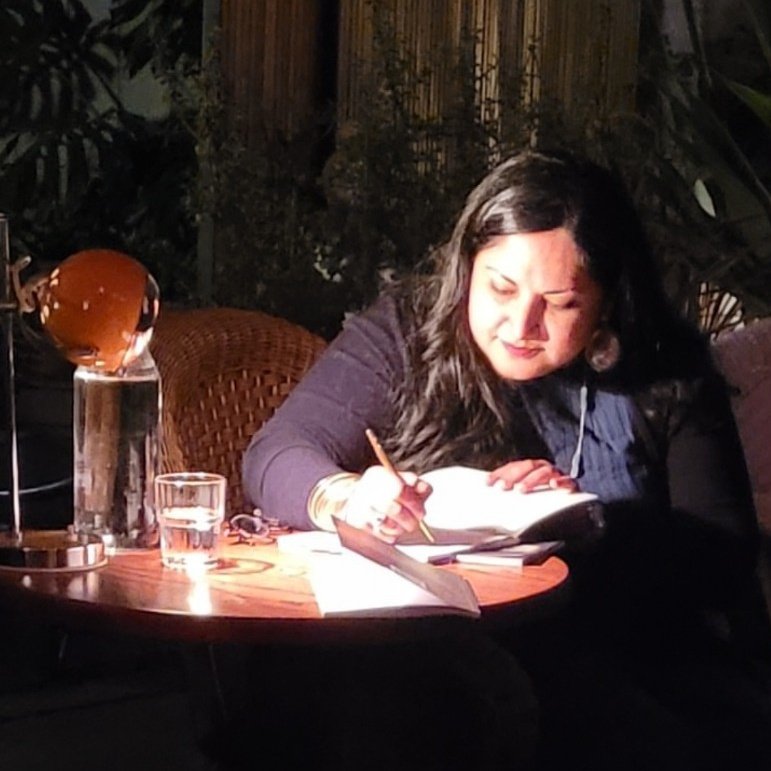
Photo of a woman standing in an event space. The woman has long black hair and is smiling at the camera. She is wearing wearing a blue dress; black jumper; and round, gold coloured jewellery.

Instead of the speeches and readings you’d see at a typical book launch, in this one the publisher and editor (Jessica Wilkinson) asked Nadia and Will — the two authors whose books she was launching — a bunch of insightful questions. She also got them to read some of their poems that helped illustrate their answers. It was good format and it worked really well.

Photo of two people seated on wicker chairs in an event space. The man on the left is speaking into a wireless microphone that he is holding in one hand, while in the other hand he holds a folded-over book. The woman on the right is looking at the speaker. In her lap she has a book with several sticky-notes sticking out of it.

A whole bunch of people bought Nadia’s book.

Photo of two piles of books lying on a table, with a portable payment card reader and a tumbler of lemon, lime, and bitters lying next to the books.

And there was a long line of people who wanted her to sign their copy :)

Photo of a woman sitting in a wicker chair and leaning over to sign her name in a book that she is holding open on top of a table next to the chair. A small lamp shines a pool of light over the table top.

All told it was a fantastic evening, and then a bunch of us made our way to the pub down the street to have dinner :)

Nadia's book is out!

Nadia’s book, The Djinn Hunters, is out!

You can buy it online and, if you’re in Melbourne, you can join us at the book launch on Tuesday, 26 September 2023 at Crystal Palace in Carlton North. The event is free, but you do need to RSVP.

This is poet Kevin Brophy’s blurb from Nadia’s book:

‘Nadia Niaz dances worlds into being. Hers is a rich and heady poetry, unafraid to play with form, spun for us across contrasting worlds, languages, time, customs. It’s a poetry to savour, gasp and marvel at for its spirit of sustained and generous observation.’

—Kevin Brophy

Hope to see a bunch of you at the launch!

Perfect timing

Perfect timing with the delivery! I’m heding into the long weekend in Melbourne with the latest Seanan McGuide book :) #WinningAtLife

(Not that it'll take me the whole weekend to read it, of course.)

Photo of a man holding up a paperback book titles ‘Calculated Risks’ by New York Times bestselling author Seanan McGuire. In the background of the photo is a red dog, sitting on the grass, looking up at the photographer.

The Left-Handed Booksellers of London

Garth Nix is one of my favourite authors and his latest book, The Left-Handed Booksellers of London, is fantastic.

I spend a sunny weekend in Melbourne being transported to 1980s London while reading this book – and I loved every minute of it!

10/10 would recommend.

Photo of a man holding an e-reader that shows the cover of a book called ‘The Left-Handed Booksellers of London’ by author Garth Nix. The tagline above the book title reads ‘Authorised to kill…and sell books’. The photo is taken in a garden, with grass and flora in the background.

My Bridge Authors

In the November 2012 episode of the ‘First Tuesday Book Club’ Jennifer Byrne and her guests discussed the ‘The Chrysalids’ by John Wyndham.

Author Monica McInerney had this to say about it:

The Chrysalids by John Wyndham was what I call my bridge book. It was my first book to read that wasn't Enid Blyton, Trixie Belden, you know, like children's books. And it was the book that introduced me to a whole world of adult fiction. So it was the one that I walked across into a big, wider world of books. [Read the full transcript on the ABC website]

To a certain extent ‘The Chrysalids’ was my bridge book, too.

However I took my first steps into the world of adult fiction with the help of a number of authors, including (in no particular order):

My proper love of adult fantasy fiction didn’t kick in till later. Not till I’d read things like the ‘Duncton Wood’ series by William Horwood and, of course, the J.R.R. Tolkien canon.

What These Authors Did For Me

Of all those books, I think the ones that really opened my mind were Wyndham’s ‘The Day of the Triffids’ and ‘The Chrysalids’. I suspect that’s because they were among the first adult-level first person narratives I’d read. And, as someone who has a younger sister, David and Petra’s relationship in ‘The Chrysalids’ was something I related very strongly to. 

The stories that inspired me the most were probably the Clarke and Asimov short stories. I both wanted to be and had a huge crush on Susan Calvin and was generally looking forward a world in which Multivac existed.

Finally, the books that got me thinking the most about people, society, and politics were the ones by McCaffrey, Christie, and MacLean. Also, I think the first few books I ever read in which people simply lived and worked in space – as opposed to went exploring in space – were McCaffrey’s.

Newer Bridges to Cross

In more recent years (the last fifteen or so) the latest literary “bridge” I’ve crossed has been into Young Adult (YA) fiction. And the authors that have led the charge in that crossing have (so far) been J.K. Rowling, Suzanne Collins, and Philip Pullman.

What were your bridge books and who were your bridge authors?